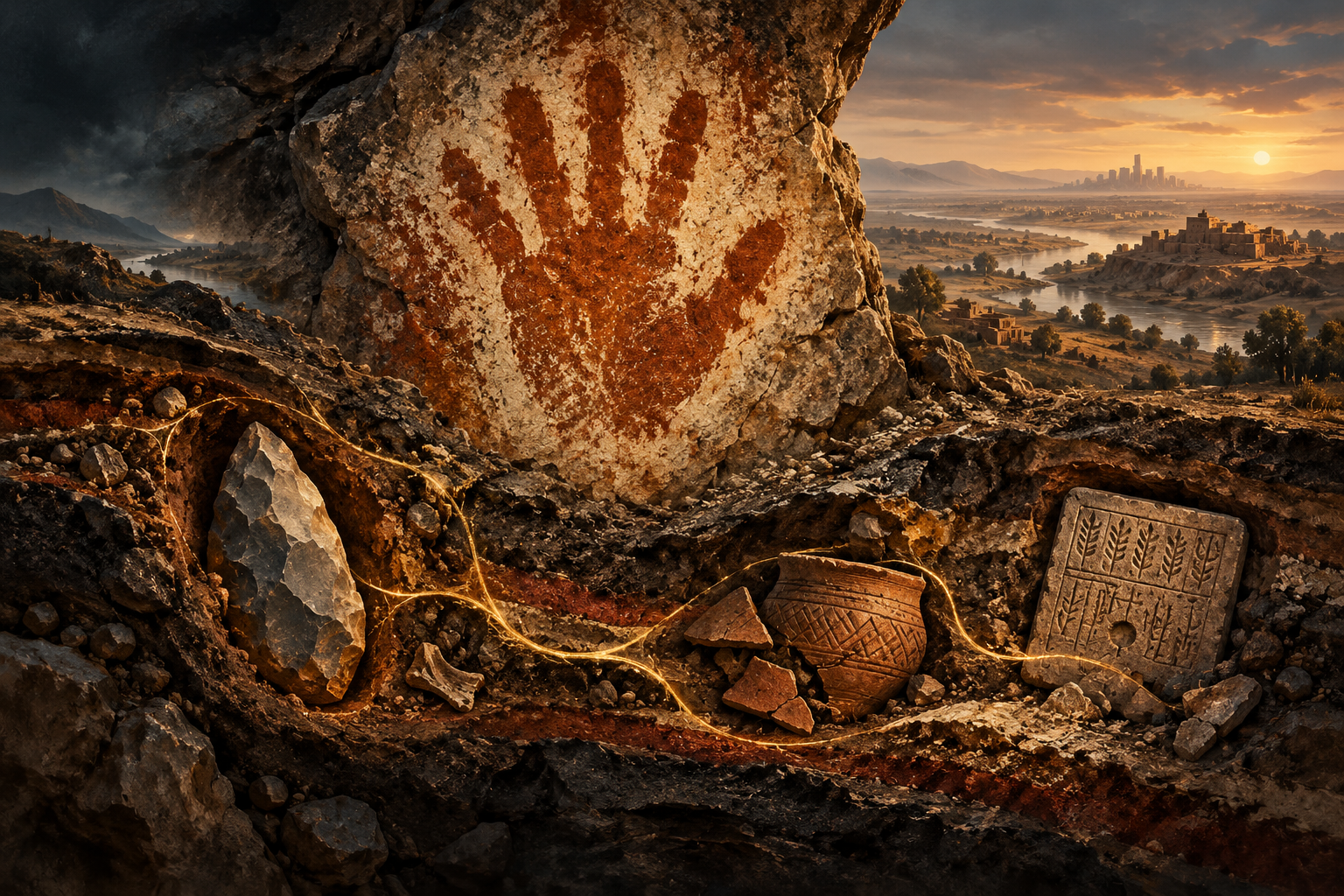
Mobile and settled communities created technology, art, exchange and belonging long before kings.
EARLY CULTURAL WORLDS · CURRENT SCOPE
Before only
we remained.
For now, this area shows cultural traditions underway while multiple human lineages still existed. Read each reconstruction alongside its evidence, uncertainty and human consequence—not as a literal photograph of one named people.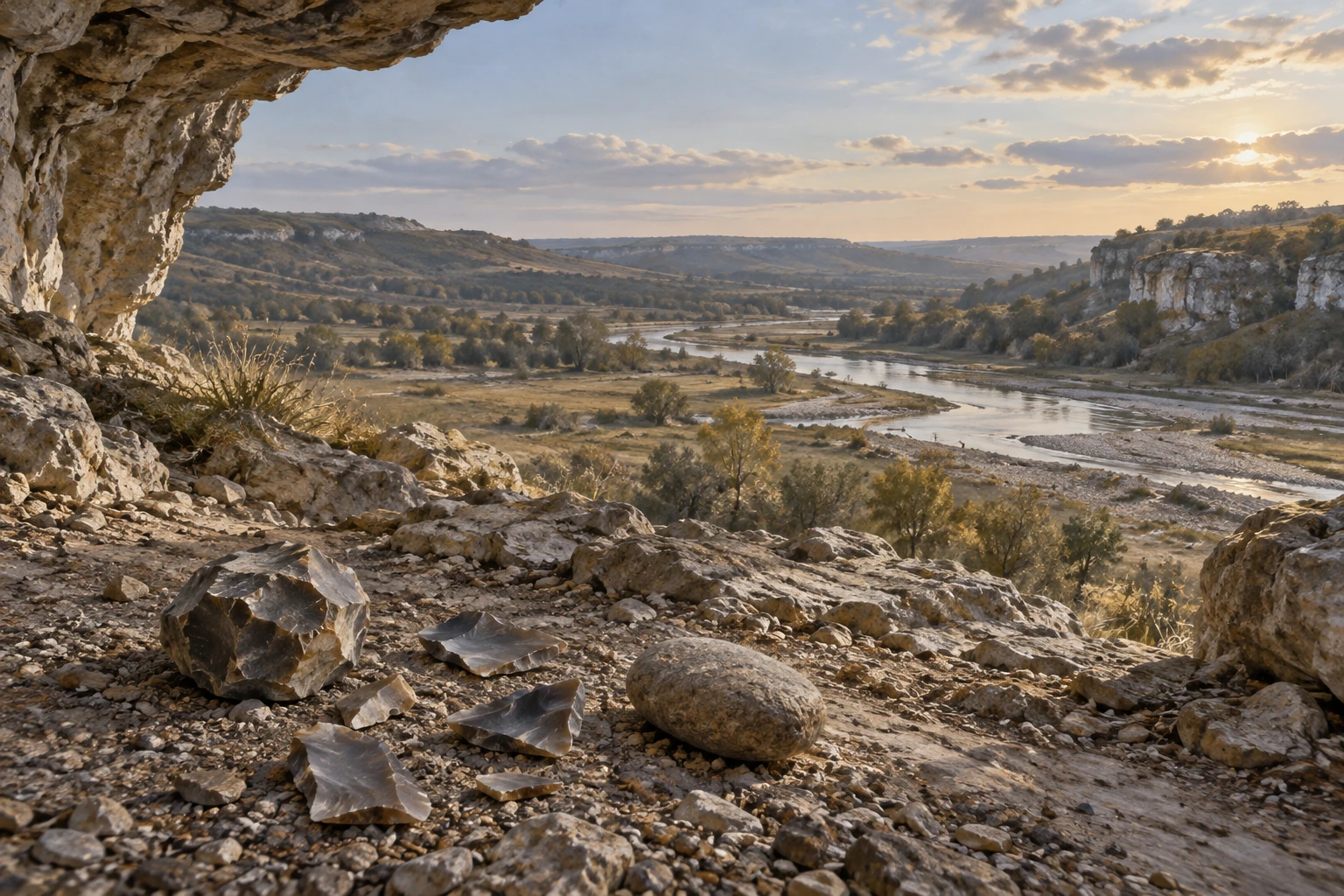
Food, animals, trade, migration, marriage, conflict and ideas link every cultural world.
A polity can end while languages, communities and identities continue.
Archaeological cultures, self-named peoples, empires and myths are not the same evidence category.
THE COHESIVE THREAD
What changes from one era to the next?
This is not a progress ladder. Each transition changes the scale and density of human relationships while older ways of living continue.Deep time
People built social worlds before states
Mobile communities taught skills, shared food, exchanged materials and maintained relationships across distance. This is civilization as coordination—not rank.01Deep timec. 300,000–10,000 years ago · Africa → world
- ⇄ Contact
- Mobile communities, alliances, teaching and gene flow
- ◇ Exchange
- Stone, shell and pigments moved across long distances
- ⚒ Technology
- Fire, composite tools, watercraft and art
- ◒ Food
- Regionally diverse hunting, fishing and gathering
 02Deep time
c. 160,000–40,000 years ago · Europe · West Asia
- ⇄ Contact
- Regional mobility; later contact with H. sapiens
- ◇ Exchange
- Raw materials, pigments and portable objects
- ⚒ Technology
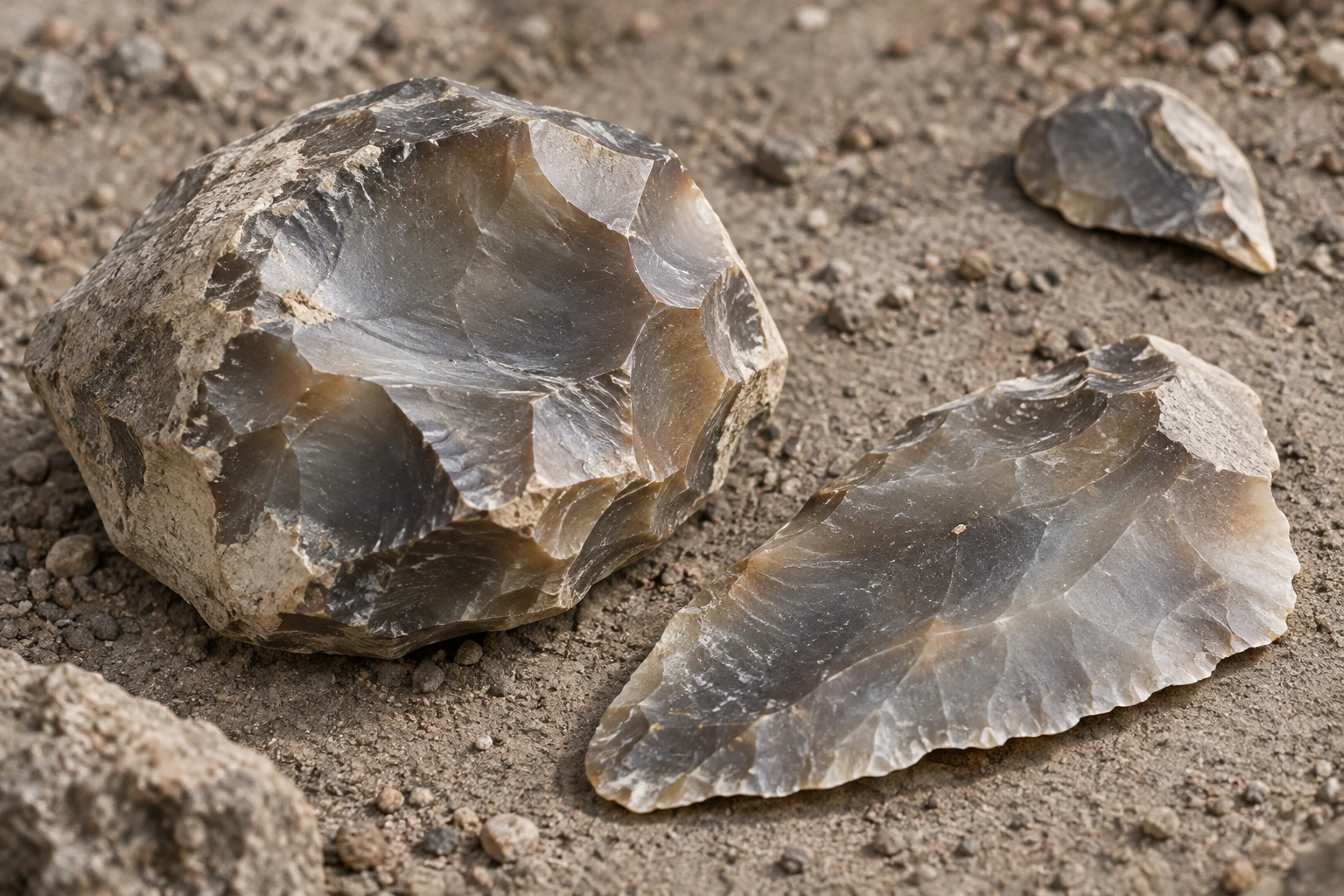
- Levallois tools, hafting, fire and hide work
- ◒ Food
- Large and small game, shellfish and cooked plants
 03Deep time
c. 300,000–30,000 years ago · Central and East Asia
- ⇄ Contact
- Denisovan, Neanderthal and later sapiens occupations at different times
- ◇ Exchange
- Artifact authorship usually remains uncertain
- ⚒ Technology
- Middle Paleolithic tools and high-altitude adaptation
- ◒ Food
- Plateau and forest fauna; plant evidence is sparse
MAJOR FEATURE · IN DEVELOPMENT
The rest of the human civilization story comes next
The later release will restore the global civilization archive with dedicated regional coverage, continuity records, comparisons, evidence controls and a distinct launch experience.RELATED EXPLAINERS
Watch, question, verify.
YouTube previews link to the original video. If a preview is unavailable, a clearly labeled archive illustration appears. Verify scientific claims against primary sources.
 WATCH ON YOUTUBE ↗
▶Crash Course World History
Rethinking Civilization
Challenges the category instead of treating it as a neutral box.Open on YouTube ↗ WATCH ON YOUTUBE ↗
▶Crash Course World History
Mesopotamia
Compact introduction to cities, labor, states and evidence.Open on YouTube ↗ WATCH ON YOUTUBE ↗
▶Crash Course World History