Anatomy
Known from teeth, jaws, fragmentary bones and the Harbin cranium attribution; a complete body reconstruction is not possible.
COMPREHENSIVE INTERACTIVE REPORT · High lineage; sparse fossils
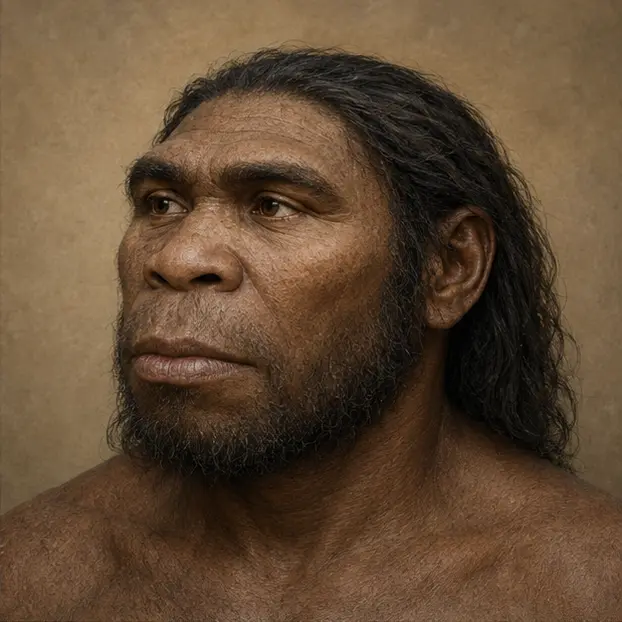
An archaic human lineage first identified genetically and now connected to a growing but still limited fossil and protein record.
Known from teeth, jaws, fragmentary bones and the Harbin cranium attribution; a complete body reconstruction is not possible.
Occupied Siberian, Tibetan Plateau and probably broader Asian environments.
Denisova and Baishiya occupations include stone tools and animal processing, but artifact authorship varies by layer.
The record is too sparse to reconstruct Denisovan clothing confidently. Reconstruction is shown without garments.
High-altitude adaptation and repeated cave use are supported; named rituals and broad cultural unity are not.
A sister lineage to Neanderthals with several introgression events into living populations.
Which Asian fossils are Denisovan and how genetic lineages align with morphospecies names.
Denisovan-derived variants remain important in some Oceanian, Asian and Indigenous American ancestries.
SOURCE DESK